Daily Emotion Tracker Guide: Your Roadmap to Self-Awareness 2026
Imagine waking up each morning with the power to truly understand your own emotions, one gentle step at a time. What if a simple habit could reveal your hidden patterns, strengths, and triggers?
This guide will show you how a daily emotion tracker can open the door to greater self-awareness and emotional intelligence in 2026. We’ll walk you through the science, setup, and best tools, and share real stories of transformation.
Curious to see how tracking your feelings can spark personal growth? Let’s begin this journey toward a more mindful, emotionally connected you.
The Science and Benefits of Daily Emotion Tracking
Imagine waking up tomorrow with a clearer sense of why you feel the way you do. That’s the promise of a daily emotion tracker. This simple tool isn’t about controlling your feelings, but understanding them—turning everyday moments into a deeper awareness that can change your life.

Understanding Emotional Self-Awareness
Emotional self-awareness is the ability to recognize and understand your own emotions as they arise. It’s the cornerstone of mental health and well-being. When you use a daily emotion tracker, you start to notice patterns that were once hidden. These small insights can help you regulate your reactions, build resilience, and feel more grounded.
Daniel Goleman’s Emotional Intelligence framework highlights self-awareness as the first step in emotional growth. According to a 2024 American Psychological Association study, people who consistently use a daily emotion tracker experience 23% greater mood stability compared to those who don’t. This stability comes from noticing emotional triggers before they spiral. For instance, one user realized that work emails late at night always sparked anxiety. By tracking these moments, they could set healthier boundaries.
A daily emotion tracker also plays a powerful role in reducing anxiety and depression. When you see your feelings written out, they become less overwhelming and more manageable. Relationships benefit too—clearer emotional awareness leads to better communication and empathy. If you want to dive deeper into the science behind this practice, explore emotional journaling benefits for more research and stories.
What’s the key takeaway? Consistency. Like watering a plant, regular tracking helps your emotional growth take root, leading to long-lasting self-improvement.
Psychological and Physiological Impacts
Tracking your emotions isn’t just about the mind—it’s about the body too. Studies show that people using a daily emotion tracker report 30% fewer stress-related symptoms in 2025 surveys. By noticing stress before it builds up, you can take action early, whether that means a deep breath or a quick walk.
There’s also a fascinating brain benefit. Repeated reflection through a daily emotion tracker helps strengthen neural pathways linked to emotional intelligence. This is neuroplasticity in action: the more you reflect, the easier it becomes to understand and manage your feelings.
Let’s look at a real-life example. Someone tracked their emotions before and after a major life change, like moving to a new city. They noticed a spike in anxiety during the first week, but also saw how it gradually shifted to excitement as routines formed. This kind of insight turns vague feelings into actionable knowledge.
In summary, the practice of tracking emotions daily transforms both your psychological resilience and your physical health. It’s a gentle tool that helps you spot patterns, adjust habits, and build a life that feels more authentic—one day at a time.
How to Start Your Daily Emotion Tracking Journey
Imagine opening a window into your emotional world—one small step at a time. Beginning your daily emotion tracker journey is not just about noting feelings, it is about creating a ritual of self-discovery. Let us walk through each step, making the process as approachable and inspiring as possible.

Step 1: Setting Clear Intentions and Goals
Starting a daily emotion tracker is like planting a seed—you need to know what you hope will bloom. Define why you want to track your emotions. Is it to manage anxiety, spot energy dips, or simply understand yourself better?
Some people set intentions such as "I want to recognize my mood patterns" or "I hope to identify my main stress triggers." Writing these out gives your practice direction. Research from the Journal of Behavioral Science in 2025 found that clear goals increase daily emotion tracker adherence by 40 percent.
Try writing a brief mission statement for your journey. For example, "My daily emotion tracker helps me grow by revealing my feelings and patterns." This statement becomes a gentle reminder on days when motivation fades.
Remember, the daily emotion tracker is not about perfection. It is about honest reflection and curiosity. By starting with clear intentions, you give yourself the best chance for lasting change.
Step 2: Choosing the Right Tracking Method
There is no single path to self-awareness—your daily emotion tracker can take many forms. Some people love the convenience and analytics of digital apps, while others prefer the tactile calm of pen and paper. Hybrid methods, blending both, are growing in popularity.
Here is a quick comparison:
| Method | Pros | Cons |
|---|---|---|
| Digital | Automatic reminders, analytics, easy updates | Screen fatigue, less creative |
| Analog | Mindful, creative, private | No automatic reminders, harder to analyze |
| Hybrid | Best of both, flexible | Requires setup, can be complex |
Digital apps often provide real-time feedback and mood graphs. Paper journals invite creative doodling and mindful pauses. If you are curious about which apps stand out, check out these mood journaling app insights for practical examples and tips.
Your daily emotion tracker should suit your lifestyle and personality. Experiment, and do not be afraid to switch methods until you find your fit.
Step 3: Selecting Your Tracking Frequency and Metrics
How often should you use your daily emotion tracker? Some prefer jotting down feelings once each evening, giving a big-picture view of the day. Others check in multiple times, capturing shifting moods and triggers in real time.
Key metrics to consider for your daily emotion tracker:
- Mood (happy, sad, anxious, calm)
- Energy level
- Triggers or events
- Physical sensations (tension, fatigue)
- Context (who, where, when)
A 2025 poll found most users choose evening reflection for a holistic review. Try out different templates—some use color-coded charts, others prefer simple lists. The goal is to make your daily emotion tracker easy and inviting, not a chore.
Step 4: Building the Habit
Creating a daily emotion tracker habit is like weaving a new thread into your daily routine. Start small—stack tracking onto an existing habit, like brushing your teeth or making tea.
Environmental cues, like keeping your tracker by your bed, help you remember. Many people use reminders or alarms, while others buddy up with an accountability partner for gentle nudges.
Research on habit formation suggests it takes about 21 days for a new routine to stick. Celebrate small wins, and be kind to yourself if you miss a day. With patience and consistency, your daily emotion tracker will soon feel as natural as breathing.
Step 5: Overcoming Common Challenges
Even the most dedicated daily emotion tracker fans hit roadblocks. Forgetfulness, low motivation, or emotional avoidance can creep in.
Here are some strategies to keep your practice alive:
- Gamify your tracker with stickers or points.
- Join a supportive group or share progress with a friend.
- Personalize with colors, symbols, or creative prompts.
Studies from 2024 show users who personalize their daily emotion tracker are twice as likely to persist. If you get stuck, create a troubleshooting guide for yourself—think of it as a gentle map out of rough patches.
Remember, the daily emotion tracker is a tool for self-compassion, not self-judgment. Each entry, even on tough days, is a step toward understanding and growth.
Top Tools and Apps for Daily Emotion Tracking in 2026
Imagine opening your phone or journal each day, ready to capture the colors of your mood and the music of your feelings. The right daily emotion tracker transforms this ritual into a personal sanctuary, where self-reflection becomes as natural as breathing. Whether you prefer swiping through apps or sketching in a notebook, the latest tools in 2026 invite you to explore your inner world with creativity and clarity.
Digital Solutions: Best-in-Class Apps
Digital tools for daily emotion tracker routines have reached new heights in 2026. Imagine apps that not only log your mood but also offer gentle nudges, AI-powered insights, and beautiful visual dashboards. Top picks include Moodnotes, Daylio, and Reflectly, each offering a unique blend of features:
| App | Key Features | Platform | Standout Function |
|---|---|---|---|
| Moodnotes | AI mood analysis, mood graphs, reminders | iOS, Android | Thought pattern tips |
| Daylio | Visual dashboards, habit tracking, privacy | iOS, Android | Custom mood labels |
| Reflectly | Journal prompts, analytics, wellness sync | iOS, Android | Story-driven insights |
What makes these digital daily emotion tracker tools shine? Real-time feedback, customizable reminders, and seamless integration with wellness platforms. According to a 2026 consumer report, app users show 35% higher engagement than those using paper-only methods.
Looking for a deeper dive into the best options? Check out this Daily reflection app guide for hands-on reviews and tips on choosing the perfect fit.
User testimonials bring these apps to life. One user shares, "Reflectly’s prompts helped me find patterns in my stress—now, I catch negative spirals early and shift my mindset." Screenshots reveal intuitive layouts, mood wheels, and progress graphs that make emotional trends easy to spot.
Analog & Hybrid Tools: Journals and Planners
Sometimes, the tactile ritual of pen and paper speaks to the soul. Analog daily emotion tracker options like guided journals and bullet journals invite you to slow down, reflect, and express emotions creatively. Many feature mood-tracking layouts, color-coded keys, and space for sketches or gratitude lists.
Hybrid tools blend the best of both worlds. Smart notebooks let you digitize handwritten entries, while printable templates and sticker systems add playful structure. Here’s a quick comparison:
| Tool Type | Benefits | Example Use |
|---|---|---|
| Paper Journal | Mindful reflection, privacy | Drawing mood mandalas |
| Smart Notebook | Syncs to cloud, searchable | Digital archiving |
| Sticker System | Visual, fun, quick to update | Color-coded emotions |
Many find that combining analog and digital daily emotion tracker methods fuels creative engagement and long-term consistency. For instance, you might jot down feelings in a journal, then log highlights in an app for data analysis.
Bullet journal mood trackers are especially popular. Imagine a monthly spread filled with colored boxes—each hue tells a story, capturing the ebb and flow of your emotional tides. This hands-on approach turns tracking into a mindful, almost meditative practice.
Eveokee: Transforming Emotional Journaling Through Music
Eveokee takes the daily emotion tracker concept to a new dimension by blending your diary with personalized music. After you jot down your feelings, Eveokee’s AI transforms your words into unique music tracks that echo your emotional state, making self-reflection a multisensory experience.
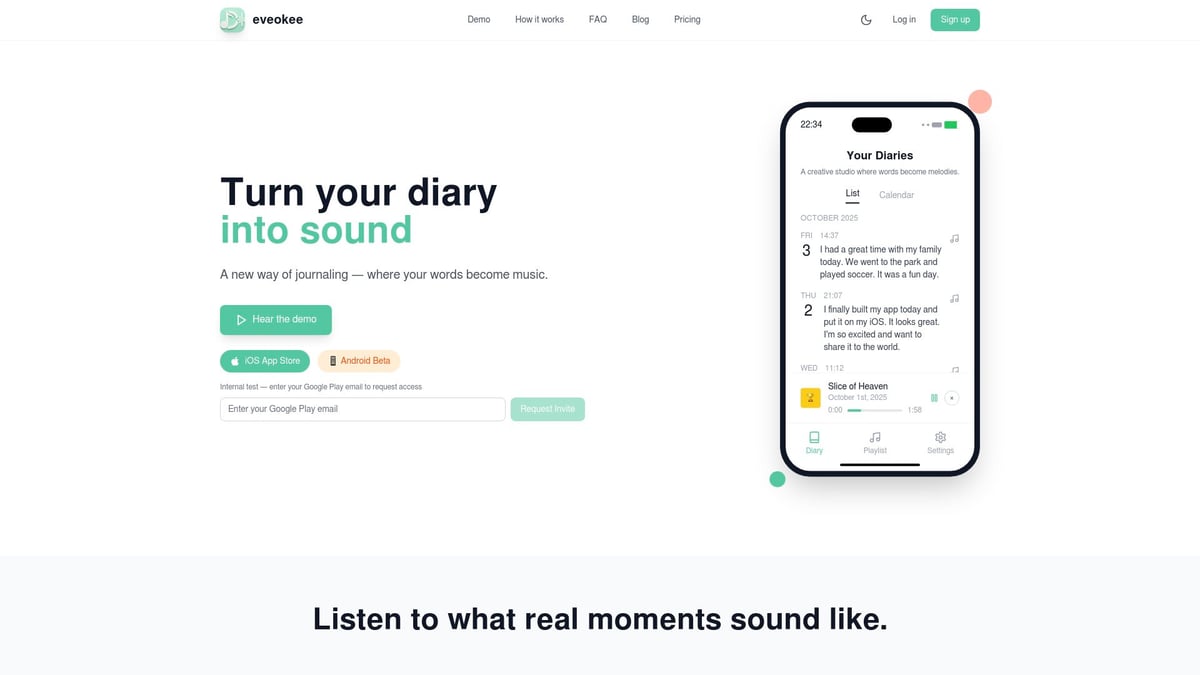
Users can create playlists that match their mood journey, listen back to relive and process feelings, and access the platform easily on iOS or Android. Features like emotional resonance and music-driven prompts inspire deeper self-awareness, especially for creative souls seeking a fresh approach.
Eveokee’s accessibility and immersive design make it a standout daily emotion tracker for those who crave more than graphs and numbers. Imagine hearing your growth as a symphony—each note a step closer to understanding yourself.
Whether you prefer digital dashboards, colorful journals, or music-powered reflection, the world of daily emotion tracker tools in 2026 is richer and more inviting than ever. The key is to find what sparks your curiosity and fits seamlessly into your life.
Making Sense of Your Emotional Data: Analysis and Insights
Understanding your emotional patterns can feel like reading the weather of your inner world. With a daily emotion tracker, you transform fleeting feelings into a living map that guides your growth. Let’s explore how to interpret your emotional data, draw out wisdom, and avoid common missteps.

Interpreting Patterns and Trends
Every entry in your daily emotion tracker is a brushstroke, painting a picture of your inner landscape. Over weeks, you’ll begin to notice cycles—maybe you feel lighter on weekends, or stress spikes before meetings. Spotting these trends can be transformative.
Visual tools make patterns pop:
| Tool | What it Shows | Why it Helps |
|---|---|---|
| Mood Graphs | Emotional ups and downs | See mood cycles over time |
| Heatmaps | Intensity of emotions | Identify peak triggers |
| Emotion Wheels | Range and nuance | Expand emotional vocabulary |
Set aside a few minutes each month for a review session. Compare your mood graphs to major life events. Did a project deadline affect your sleep or stress? Research from 2025 found that visualizing your data increases self-insight by 28 percent.
If you want to see how experts use mobile diaries and large language models to analyze emotional states, check out the CALLM: Context-Aware Emotion Analysis in Cancer Survivors study. It shows how a daily emotion tracker can reveal hidden emotional patterns and support well-being.
Turning Insights Into Action
Noticing a pattern is only the beginning. The real magic happens when you use your daily emotion tracker to set goals and make changes. For example, if you see that your mood dips after certain social events, you can plan gentle self-care for those days.
How to turn insights into growth:
- Set an emotional goal, like “I want to feel more energized on Mondays.”
- Create an action plan for recurring challenges, such as quick breathing exercises after stressful meetings.
- Share your findings with loved ones or colleagues, making it easier to communicate your needs.
A daily emotion tracker helps you become your own coach. If you want extra inspiration, explore this self-discovery app for growth for more tools that turn reflection into action.
By taking small steps, you’ll notice your emotional landscape shifting. Each tracked feeling becomes a stepping stone towards more mindful living.
Avoiding Common Pitfalls in Data Interpretation
Interpreting your daily emotion tracker data can feel overwhelming at first. It’s easy to overanalyze or blame yourself for every mood swing. Remember, context matters—your feelings are shaped by sleep, nutrition, environment, and even the weather.
Tips to stay grounded:
- Pair your tracker with a journal. Jot down what else is happening in your life.
- Look for big-picture trends, not just daily blips.
- Be gentle with yourself when patterns don’t make sense right away.
Your daily emotion tracker is a tool for curiosity, not judgment. Let it help you understand, not criticize. With patience and practice, you’ll uncover insights that foster resilience and self-compassion.
Real-Life Success Stories and Advanced Tips
Real transformation often begins with a single, honest entry in your daily emotion tracker. The stories below reveal how small, mindful steps can spark remarkable changes, whether you are a student, a professional, or anyone seeking a deeper connection with your inner world.
Case Studies: Transformations Through Daily Emotion Tracking
Consider a university student overwhelmed by exam stress. By using a daily emotion tracker, she noticed her anxiety peaked before group study sessions. With this insight, she shifted her routine, scheduling solo review before joining peers. Her stress levels dropped, and her grades improved noticeably.
A young professional, exhausted and on the verge of burnout, began logging feelings in his daily emotion tracker. Patterns emerged: late-night emails and skipped lunches correlated with irritability. He adjusted his schedule, set firmer boundaries, and saw his mood stabilize within weeks.
These stories echo a common theme: consistent use of a daily emotion tracker uncovers hidden triggers and empowers real change. The act of noticing, recording, and reflecting turns scattered feelings into actionable insights.
Advanced Tracking Techniques for 2026
As technology evolves, your daily emotion tracker can do more than capture moods. Imagine integrating biometric data, like heart rate or sleep quality, for a holistic view of your emotional landscape. Wearable devices now sync seamlessly with tracking apps, offering real-time feedback and gentle nudges.
Research such as SensEmo: Real-time Emotion Recognition with Smartwatches demonstrates how smartwatches can detect subtle physiological shifts that mirror your emotional state. AI-powered companions, like those described in Livia: Emotion-Aware AR Companion with AI Agents, even analyze patterns and offer personalized support, helping you anticipate emotional highs and lows before they happen.
These innovations make your daily emotion tracker smarter, more adaptive, and deeply intuitive. By pairing technology with self-reflection, you unlock a richer understanding of yourself.
Community and Social Sharing
Tracking emotions is powerful, but sharing your journey multiplies its impact. Many find that discussing daily emotion tracker insights in supportive online groups or in-person circles brings new perspectives and motivation.
In 2026, users who participated in community challenges or group reflections reported 19 percent higher satisfaction with their progress. Whether it is a themed challenge, a monthly review, or simply sharing a single day's struggle, the act of connecting transforms solitary tracking into a shared adventure.
Your daily emotion tracker becomes a bridge, linking your personal growth to a wider, understanding world.
Customizing Your Tracker for Maximum Impact
Personalization turns a daily emotion tracker from a tool into a trusted companion. Creative prompts, symbols, and color codes breathe life into each entry, making every page or screen uniquely yours.
Try these ideas for deeper engagement:
- Assign colors to emotions, painting your mood cycles visually.
- Use stickers, doodles, or themed layouts for special occasions.
- Add prompts like "What did I learn today?" or "What helped me cope?"
A customized daily emotion tracker not only increases your emotional connection but also encourages long-term commitment. Let your tracker reflect your story, one creative touch at a time.
You’ve explored the power of emotion tracking—the science, the tools, and the magic of tuning into your inner world each day. But what if you could go beyond words and actually feel your memories pulse through you again? With Eveokee, you don’t just jot down a mood or a fleeting thought. You capture the essence of a moment and let it bloom into music—something living, something you can hear and feel. If you’re ready to turn your daily reflections into a sensory experience, Capture a feeling. Hear it come alive.